
Petrol Bike vs Electric Bike in Pakistan: The Ultimate Monthly Running Cost Breakdown (2026 Edition)
Understanding the electric bike running cost in pakistan is essential for everyday commuters looking to beat soaring fuel prices in 2026. With petrol rates climbing steadily, switching to top-tier electric models like the Yadea E8S Pro—available through trusted platforms like REC Digital and Rafiq Electronics—has become the smartest financial decision for urban riders.
Monthly Running Cost Comparison (900 km/Month)
To see the real-world savings, let’s break down the math for an average monthly commute of 900 km:
-
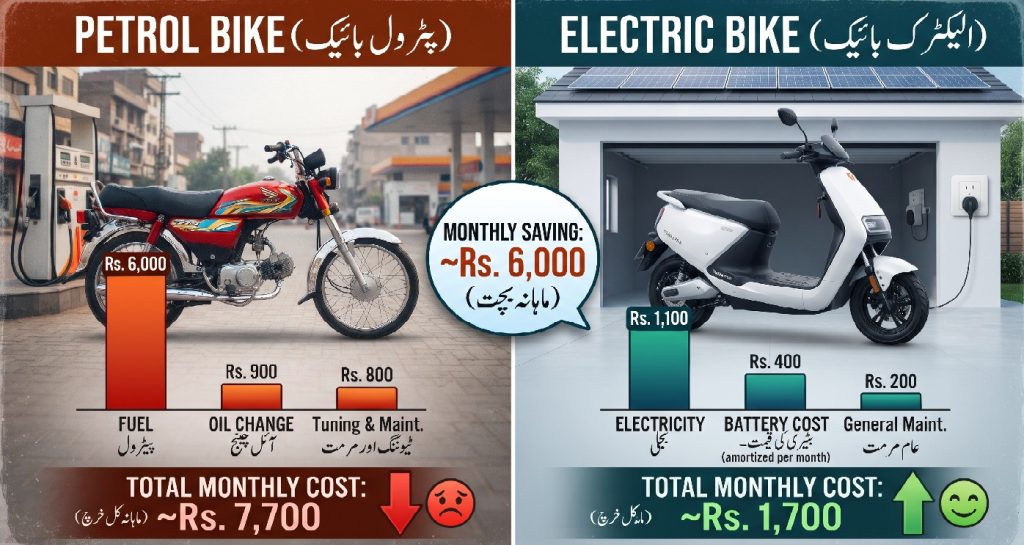
Traditional Petrol Bike: Consuming fuel at standard averages results in a monthly expenditure of approximately Rs. 7,700.
-
Electric Bike (e.g., Yadea E8S Pro): Charging an EV via standard household electricity brings the monthly charging expense down to just Rs. 1,700.
-
Total Monthly Savings: Riders save a massive Rs. 6,000 every month, recovering the initial vehicle investment in no time.
Why Switch to Electric in 2026?
Beyond optimizing your electric bike running cost in pakistan, EVs offer zero engine maintenance, zero oil changes, and silent, vibration-free performance. Explore the latest electric inventory today at REC Digital and make the switch to smart, economical mobility!
The Great Urban Shift in Pakistan’s Commuter Market
For decades, the standard 70cc and 100cc petrol motorcycles have been the undisputed backbone of daily transportation across Pakistan’s bustling cities like Lahore, Karachi, Faisalabad, and Islamabad. Millions of office workers, delivery personnel, students, and small business owners rely on these economical fuel-powered bikes to navigate daily traffic. However, with persistent fluctuations and spikes in global petroleum prices, skyrocketing inflation, and growing environmental concerns regarding urban air pollution, the financial burden of maintaining a petrol motorcycle has grown heavier for the average household.
Enter the electric vehicle (EV) revolution. Over the past few years, electric scooters and bikes—such as the Yadea E8S Pro, Evee C1 Air, and Metro T9—have surged onto Pakistani roads. Promoted for their near-silent operation, zero tailpipe emissions, and remarkably low operating costs, EVs represent a profound paradigm shift.
Yet, before making a significant investment in an electric two-wheeler, every pragmatic buyer asks one fundamental question: How much money will I actually save every month compared to my traditional petrol bike?
In this comprehensive, in-depth guide, we will break down the exact math behind monthly running expenses, fuel versus electricity consumption, maintenance requirements, and long-term savings in Pakistan’s current economic climate.
1. The Real Cost of Riding a Petrol Bike (70cc / 100cc)
To understand the financial benefits of switching to an electric bike, we must first establish a baseline using Pakistan’s most common commuter motorcycle: the standard 70cc petrol bike.
Let us assume an average urban commuter travels 30 kilometers per day, which translates to approximately 900 kilometers per month (accounting for office commutes, errands, and weekend trips).
A. Fuel Consumption and Expenses
-
Average Mileage: In heavy urban traffic, a standard 70cc or 100cc bike delivers roughly 40 to 45 kilometers per liter of petrol.
-
Monthly Fuel Requirement: To cover 900 km at an average of 45 km/L, the bike consumes approximately 20 liters of petrol per month.
-
Monthly Fuel Cost: With petrol priced steadily around standard market rates, 20 liters translate to roughly Rs. 5,800 to Rs. 6,200 per month.
B. Periodic Maintenance and Consumables
Unlike electric motors, internal combustion engines have dozens of moving parts that experience friction, heat, and thermal stress. This requires regular upkeep:
-
Engine Oil Changes: Every 1,000 to 1,500 kilometers, engine oil must be replaced. At current rates, this costs about Rs. 600 to Rs. 900 monthly.
-
Engine Tune-ups & Carburetor Cleaning: Routine tuning, spark plug cleaning, and air filter replacements add another Rs. 300 to Rs. 500 per month.
-
Clutch Plates, Chains, and Sprockets: Gradual wear and tear on transmission parts adds periodic repair costs averaging Rs. 400 monthly.
Total Estimated Monthly Running Cost (Petrol Bike): Rs. 7,200 to Rs. 8,000+ per month (excluding major part overhauls or tire replacements).
2. The Economics of Electric Bikes (EVs): Low Energy, High Efficiency
Electric bikes operate on battery-powered electric motors (typically ranging from 1000W to 2000W) powered by advanced Graphene or Lithium-ion battery packs. Because electric motors convert electrical energy into mechanical motion with high efficiency, their operating expenses are drastically lower.
Using the exact same benchmark of 900 kilometers per month (30 km daily), let us examine how an electric scooter (such as the Yadea series or Evee models) performs financially.
A. Electricity Consumption and Charging Cost
-
Battery Capacity & Range: A standard premium e-bike battery pack (e.g., 72V) takes roughly 1.5 to 2 units (kWh) of electricity for a full charge, providing a real-world range of 70 to 90 kilometers.
-
Total Units Required for 900 km: Covering 900 km requires roughly 11 to 13 full charges, consuming approximately 20 to 25 electricity units (kWh) per month.
-
Monthly Electricity Cost: Calculated at standard residential electricity tariff slabs, charging your e-bike at home costs roughly Rs. 900 to Rs. 1,300 per month.
B. Maintenance Requirements
Electric bikes have zero internal combustion components. There are no pistons, valves, spark plugs, timing chains, or engine oil.
-
Engine Oil / Tune-ups: Rs. 0 (Completely eliminated).
-
General Maintenance: Brake inspections, tire pressure checks, and occasional bolt tightening cost around Rs. 200 to Rs. 300 per month.
Total Estimated Monthly Running Cost (Electric Bike): Rs. 1,100 to Rs. 1,600 per month.
3. Side-by-Side Financial Comparison Table
To give you an immediate, crystal-clear snapshot of how petrol and electric bikes stack up against each other, review the comprehensive comparison table below:
| Expense Parameter | Traditional Petrol Bike (70cc/100cc) | Modern Electric Bike (EV Scooter) |
| Energy Source | Petroleum (Petrol) | Domestic Electricity (Grid / Solar) |
| Energy Cost per Kilometer | ~Rs. 6.50 to Rs. 7.00 per km | ~Rs. 1.20 to Rs. 1.50 per km |
| Monthly Fuel / Charging Bill | ~Rs. 6,000 / month | ~Rs. 1,100 / month |
| Monthly Oil Changes & Tuning | ~Rs. 1,200 / month | ~Rs. 0 / month |
| General Monthly Upkeep | ~Rs. 500 / month | ~Rs. 300 / month |
| Total Monthly Running Cost | ~Rs. 7,700 per month | ~Rs. 1,400 per month |
| Total Annual Operating Cost | ~Rs. 92,400 per year | ~Rs. 16,800 per year |
4. Understanding Long-Term Value and Hidden Factors
While the monthly savings of over Rs. 6,000 are immediately evident, smart buyers must also consider long-term variables:
The Battery Replacement Factor
Electric bikes do not require engine overhauls, but their battery packs have a finite lifespan (typically 3 to 5 years depending on usage and charging habits). While a replacement battery represents an upfront cost down the road, the cumulative monthly savings on petrol over 3 years easily offset the battery replacement cost several times over.
Protection Against Fuel Price Volatility
Pakistan’s petroleum prices are subject to global crude oil market shifts and local currency devaluation. When petrol prices spike, petrol bike owners absorb the shock instantly. In contrast, domestic electricity costs—though regulated—offer far more stable budgeting, especially for households equipped with solar power systems. Charging an electric bike via residential solar panels effectively drops your running cost to virtually zero.
5. Where to Buy Reliable Electric Bikes in Pakistan
Purchasing an electric bike requires dealing with trusted, authorized retailers who offer genuine warranties, spare parts availability, and transparent after-sales support. If you are looking to invest in a premium electric scooter or eco-friendly ride, you can explore vetted platforms and trusted retail chains:
-
REC Digital (recdigital.pk): A premier digital platform specializing in modern home appliances, high-tech electronics, and advanced eco-friendly mobility solutions across Pakistan. REC Digital provides detailed product specifications, authentic pricing, and reliable customer guidance for transitioning to electric transport.
-
Rafiq Electronics (rafielectronics.pk): One of Pakistan’s most respected electronics and home appliance retail networks, offering top-tier electric bike brands, official warranties, and competitive market rates.
-
Lahore Centre (lahorecentre.com): A massive retail hub based in Lahore and serving Punjab, renowned for consumer electronics, home appliances, and E
Figure: Monthly running cost comparison between a traditional petrol motorcycle (approx. Rs. 7,700) and an electric bike (approx. Rs. 1,700) in Pakistan, showcasing total monthly savings of Rs. 6,000. V mobility products with flexible installment options.
Conclusion: Is It Time to Make the Switch?
The numbers speak for themselves. While a traditional petrol bike might have a lower initial purchase price, its recurring monthly running costs drain your wallet steadily over time. By switching to an electric bike, you save between Rs. 6,000 to Rs. 7,000 every single month, translating to nearly Rs. 75,000 to Rs. 80,000 in annual savings.
Beyond the undeniable financial savings, you contribute directly to reducing noise pollution and smog in Pakistan’s urban centers. For daily commuters looking to beat inflation and streamline their household budgets, investing in an electric two-wheeler is no longer just an alternative—it is the smartest financial decision of 2026.
Leave a Reply